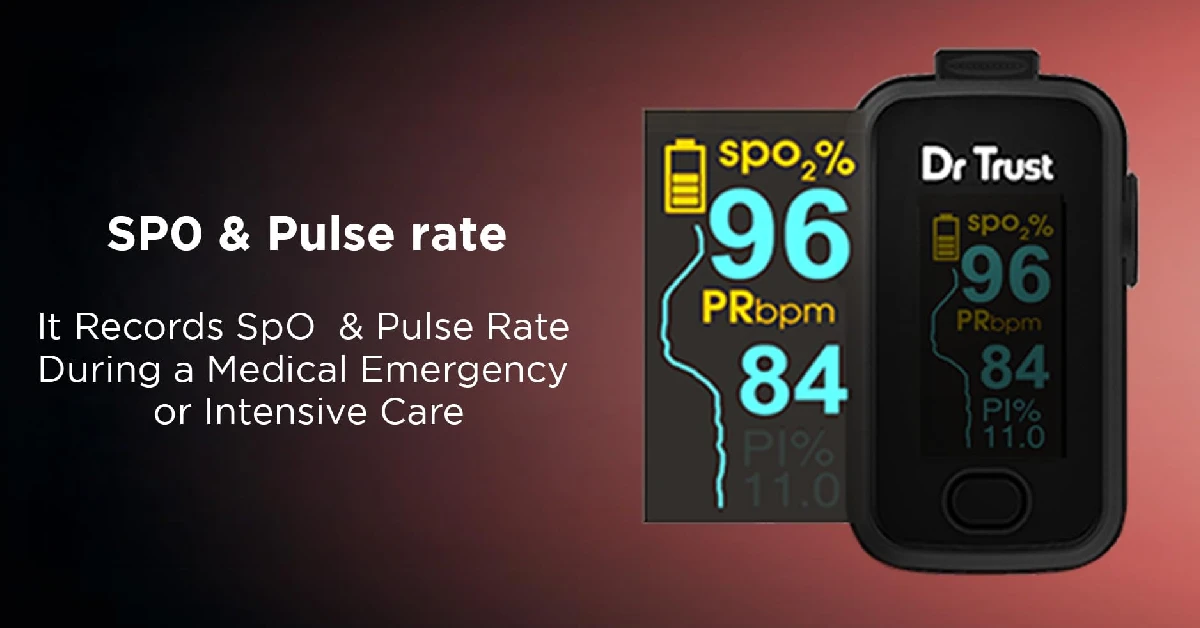
A pulse oximeter is a small device designed to measure blood oxygen saturation and pulse rate. These devices are commonly used at home, during travel, or as part of health monitoring routines. With many models available in the Indian market, choosing the right one can sometimes be confusing.
In this Dr Trust Pulse Oximeter Review India, we look at the product's features, usability, price considerations, accuracy, battery life, advantages and limitations. The goal is to help Indian consumers understand what to consider before purchasing a pulse oximeter for home use.
Important: A pulse oximeter is a monitoring device, not a diagnostic tool. If someone has serious symptoms or is concerned about their health, they should seek medical advice rather than relying solely on a home reading.
What Is a Dr Trust Pulse Oximeter?
A Dr Trust pulse oximeter is a fingertip device designed to provide readings such as oxygen saturation (SpO₂) and pulse rate. The device is placed over a fingertip, where its sensors use light to estimate the percentage of oxygenated hemoglobin in the blood.
The Dr Trust Pulse Oximeter range includes different models, so specifications can vary between products. Some models are designed primarily for home monitoring, while others may include additional display or usability features.
Its compact size makes a fingertip oximeter convenient to store at home or carry while traveling.
Dr Trust Pulse Oximeter Features
The exact Dr Trust Pulse Oximeter Features depend on the particular model. However, commonly advertised features of fingertip oximeters can include:
SpO₂ measurement
Pulse-rate measurement
Digital display
Compact design
Lightweight construction
Battery-powered operation
Automatic shut-off on some models
Simple fingertip operation
One of the biggest advantages of this type of device is its simplicity. Users generally insert a finger into the device and wait for the reading to appear.
Before buying, consumers should check the specifications of the exact model because different versions can have different displays, batteries, accessories, and features.
How Does a Pulse Oximeter Work?
A fingertip pulse oximeter estimates blood oxygen saturation using light sensors. The device shines light through the finger and analyzes how light is absorbed.
It then provides an estimated SpO₂ value and pulse rate.
Several factors can affect the quality of a reading. Cold fingers, movement, poor circulation, nail products, and incorrect positioning can interfere with measurements. This is why a single reading should not automatically be treated as a definitive assessment of someone's health.
For consistent home monitoring, users should follow the manufacturer's instructions and take measurements under similar conditions.
Dr Trust Oximeter Accuracy
One of the most important questions in any Dr Trust Oximeter Accuracy discussion is whether the displayed reading accurately reflects a person's actual oxygen saturation.
Home pulse oximeters are useful monitoring devices, but readings can vary depending on the device, user, and circumstances. The U.S. Food and Drug Administration has also highlighted several factors that can affect pulse-oximeter accuracy, including skin pigmentation, circulation, skin temperature, and other conditions.
Therefore, consumers shouldn't judge a device's performance solely from one reading.
If a reading appears unexpectedly low or doesn't match how someone feels, it is sensible to repeat the measurement correctly and seek appropriate medical advice when necessary.
How to Use the Dr Trust Pulse Oximeter
Using a fingertip oximeter is generally straightforward.
Step 1: Prepare Your Finger
Make sure your finger is reasonably warm and clean. Remove anything that could interfere with the sensor if necessary.
Step 2: Insert Your Finger
Place the fingertip into the device as instructed by the manufacturer.
Step 3: Stay Still
Avoid moving your hand while the device is taking a reading.
Step 4: Wait for a Stable Reading
Allow the numbers to settle before recording them.
Step 5: Record the Result if Needed
If you're monitoring readings over time, keeping a record can make it easier to discuss changes with a healthcare professional.
Always follow the instructions supplied with the specific model.
Dr Trust Oximeter Price in India
The Dr Trust Oximeter Price in India varies according to the model, seller, features, discounts, and availability.
Basic fingertip models are generally positioned differently from models with additional features or upgraded displays.
Rather than choosing a product based only on its lowest price, consumers should consider:
Product specifications
Warranty
Seller reputation
Return policy
Battery requirements
Display readability
Intended use
Prices can change frequently, so checking the current price from an authorized seller or the manufacturer's official sales channels is recommended before purchasing.
Dr Trust Pulse Oximeter for Home Use
The Dr Trust Pulse Oximeter for Home Use can be useful for people who have been advised by a healthcare professional to monitor oxygen saturation or pulse rate.
Its compact size also makes it convenient for occasional household monitoring.
However, owning an oximeter doesn't mean that every health concern should be managed at home. Symptoms such as significant breathing difficulty, chest pain, confusion, bluish skin or lips, fainting, or rapidly worsening symptoms require appropriate medical attention.
The device should support—not replace—professional healthcare.
Dr Trust Pulse Oximeter Battery Life
Dr Trust Pulse Oximeter Battery Life depends on the specific model and the type and quality of batteries used.
Many fingertip oximeters are designed to operate on small batteries, making them convenient because they don't necessarily require a large charging setup.
If you plan to keep an oximeter as part of a home health kit, it's useful to check the battery type and keep replacement batteries available when appropriate.
Users should also remove batteries during long periods of storage if recommended by the manufacturer.
Dr Trust Pulse Oximeter Pros and Cons
Before buying, it is useful to consider the potential advantages and limitations.
Pros
Compact and portable
Simple fingertip operation
Useful for basic SpO₂ and pulse monitoring
Convenient for home storage
Easy to carry while traveling
Multiple models available
Cons
Readings can be affected by external and physiological factors
Different models have different specifications
A pulse oximeter cannot diagnose every health problem
Users may incorrectly interpret individual readings
Price and features vary between models
The suitability of a particular model depends on the user's intended purpose.
Dr Trust Oximeter Customer Review
When reading a Dr Trust Oximeter Customer Review, don't focus only on the star rating. Look at what customers actually say about the device.
Useful things to look for include comments about:
Display visibility
Ease of operation
Battery performance
Build quality
Reading consistency
Packaging
Warranty experience
Customer support
Customer reviews can provide useful information about everyday usability, but they should not be treated as scientific validation of measurement accuracy.
Dr Trust Oximeter vs Other Pulse Oximeters
When comparing Dr Trust Oximeter vs Other Pulse Oximeters, consider the specifications rather than focusing exclusively on the brand.
Important comparison factors include sensor performance, display, ease of use, battery operation, warranty, manufacturer information, and price.
A more expensive model isn't automatically the right choice, while the cheapest device isn't necessarily the best value either.
For medical monitoring, consumers should also consider whether their healthcare professional has recommended a particular type of device.
Is Dr Trust Pulse Oximeter Worth Buying?
Is Dr Trust Pulse Oximeter Worth Buying? That depends on why you need one and which model you are considering.
For basic home monitoring, a compact fingertip oximeter can be convenient. Dr Trust offers multiple models, meaning buyers can select based on features and budget.
However, people should avoid purchasing an oximeter with the expectation that it can diagnose a medical condition. Its primary role is measurement and monitoring.
If you're buying one because a doctor has specifically asked you to monitor oxygen levels, ask the healthcare professional whether there are particular device specifications or validation standards you should look for.
Dr Trust Pulse Oximeter Buying Guide
Before purchasing a device, consider these points:
1. Check the Exact Model
Don't assume every product under the same brand has identical specifications.
2. Look at the Display
A clear and readable display can make regular monitoring easier.
3. Check the Warranty
Review warranty terms and seller information before purchasing.
4. Consider Your Intended Use
Someone who needs occasional home monitoring may have different requirements from someone who has been instructed to monitor readings regularly.
5. Buy From a Reliable Seller
Check the seller's reputation, return policy, and product authenticity.
Final Thoughts
This Dr Trust Pulse Oximeter Review India highlights why fingertip pulse oximeters can be useful tools for basic health monitoring at home. Their small size, simple operation, and ability to provide SpO₂ and pulse-rate readings make them convenient for many households.
At the same time, users should understand the limitations of these devices. Readings can be affected by several factors, and an oximeter should never be used as the only basis for making an important medical decision.
Before buying, compare the exact model's specifications, warranty, price, display, battery requirements, and intended use. If you have been advised to monitor your oxygen levels by a healthcare professional, follow their guidance on how and when to take measurements.
Frequently Asked Questions
Is the Dr Trust Pulse Oximeter suitable for home use?
A fingertip pulse oximeter can be suitable for basic home monitoring when used according to the manufacturer's instructions. People with specific medical monitoring requirements should follow their healthcare professional's advice.
What does a pulse oximeter measure?
A pulse oximeter typically provides an estimate of blood oxygen saturation (SpO₂) and pulse rate.
How accurate is a Dr Trust Pulse Oximeter?
Dr Trust Oximeter Accuracy can depend on the particular model and measurement conditions. Factors such as movement, cold fingers, circulation, and other conditions can influence readings.
What is the Dr Trust Oximeter Price in India?
The Dr Trust Oximeter Price in India varies depending on the model, seller, features, and current offers. Check the current listing before purchasing.
How long does the battery last?
Dr Trust Pulse Oximeter Battery Life varies by model and usage. Check the manufacturer's specifications for the exact product.
Can a pulse oximeter diagnose a disease?
No. A pulse oximeter provides measurements that can be useful for monitoring, but it does not by itself diagnose medical conditions.
What should I do if my reading seems unusually low?
Repeat the measurement while following the device instructions and staying still. If the reading remains concerning or you have significant symptoms, seek appropriate medical attention rather than relying solely on the device.
Is Dr Trust a good option compared with other oximeters?
When considering Dr Trust Oximeter vs Other Pulse Oximeters, compare the specific models based on features, price, warranty, usability, and intended purpose rather than relying only on the brand name.